
iPhone 18 Pro Leaks: Release Date, Specs and Price (2026 Guide)
Every credible iPhone 18 Pro leak in one place: expected September 2026 release date, A20 Pro 2nm chip, under-display Face ID, variable aperture camera and realistic pricing.
TL;DR
Every credible supply-chain leak points to the iPhone 18 Pro launching in September 2026 with a 2nm-class A20 Pro chip, a variable aperture main camera, and Apple's first under-display Face ID — leaving only a small punch-hole for the front camera. Expect pricing to hold near $1,099 for the Pro and $1,199 for the Pro Max. Apple has confirmed none of this; treat every number below as a leak, not a spec sheet.
What is actually confirmed vs leaked
Related: Midjourney vs DALL-E vs Flux: A Practical Image-Tool Comparison Framework →
Related: How to Use ChatGPT on iPhone: Complete Setup and Hidden Features →
Apple confirms nothing before an event. What we have comes from three source types with very different reliability: display and chip supply-chain analysts (historically accurate on hardware, poor on dates), regulatory filings (accurate but late), and social-media accounts reposting renders (usually wrong). This article separates them.
| Feature | Leak status | Source strength | What it means for buyers |
|---|---|---|---|
| September 2026 launch | Strong pattern | Apple's 15-year cadence | Safe to plan around |
| A20 Pro on 2nm-class node | Strong | Foundry roadmaps | Big efficiency gain, modest peak speed gain |
| Under-display Face ID | Medium-strong | Display analysts | Smaller cutout, no notch |
| Variable aperture main camera | Medium | Component suppliers | Real low-light and depth improvement |
| Apple-designed modem | Medium | Ongoing transition | Better battery, possible early-gen quirks |
| Price increase | Weak | Speculation only | Assume flat until proven |
1. Design: the punch-hole year
Related: 9 Free AI Coding Tools Every Developer Should Try in 2026 →
Related: iPhone 17 Pro Review: Apple's Boldest Redesign in a Decade →
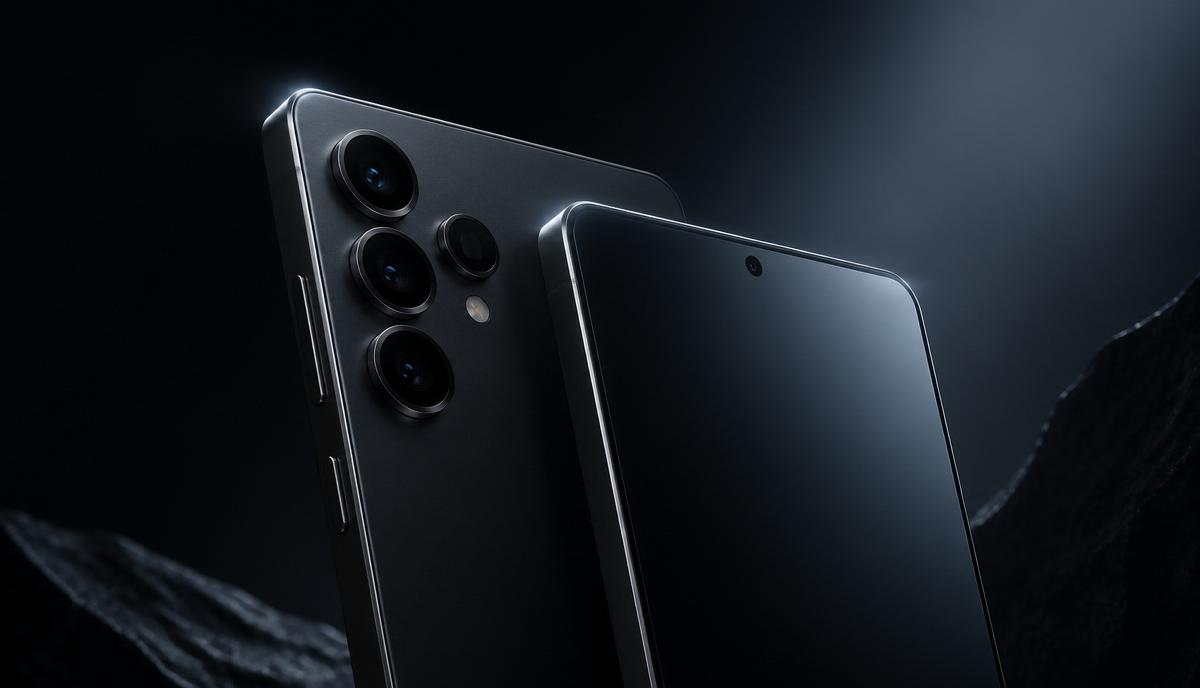
The single most-repeated claim is that Apple moves Face ID sensors beneath the display, leaving only the selfie camera visible as a small circular cutout in the top-left corner. If accurate, this is the biggest visual change since the Dynamic Island arrived, and it gives the Pro models a genuinely different silhouette from every previous iPhone — which matters more for upgrade demand than any internal spec.
The counterargument: under-display sensing has slipped in rumour cycles before. Apple ships this kind of change only when reliability matches the current sensor, because a Face ID that fails in sunlight would be a support disaster.
2. Chip: A20 Pro and what 2nm really buys you
Related: Sora 2 Review: OpenAI's Video Model Is Finally Useful for Real Work →
Related: How to Run DeepSeek-R1 Offline on Mac mini M4 (Step-by-Step 2026 Guide) →
The generational story with modern nodes is not raw speed — it is performance per watt. A 2nm-class process typically delivers something in the range of a 10–15% speed improvement at equal power, or a substantial power reduction at equal speed. Apple has consistently chosen the second option on iPhone, spending the gains on battery life and sustained performance under thermal load.
The more interesting angle is on-device AI. Larger neural engine capacity and more memory bandwidth are what allow bigger local models to run without a round trip to a server — which is the direction Apple Intelligence has been moving for two years.
3. Camera: variable aperture is the real upgrade
Related: How to Clone Your Voice with AI in 2026 (Free and Paid Options) →
Related: Apple Sues OpenAI, Alleges Ex-Engineer Stole ChatGPT Trade Secrets →
A mechanically variable aperture lets the main sensor switch between a wide opening for low light and a narrower one for depth of field and sharpness across the frame. Android flagships have shipped versions of this before; Apple adopting it would mostly matter for two groups — people who shoot in bars and at night, and people who want optical rather than computational background blur.
Also widely reported: an upgraded front camera and continued refinement of the telephoto. Nobody credible is claiming a resolution jump for its own sake.
4. Release date and pre-order timing
Related: CES 2026 Was 'AI Everywhere' — Here Is What Actually Mattered →
Apple has launched flagship iPhones in the first half of September in almost every recent year, with pre-orders the Friday after the event and shipping the following Friday. Applying that pattern to 2026 gives an event in the week of 8 September 2026, pre-orders that Friday, and availability roughly one week later. Treat this as a pattern-based estimate, not a leak.
5. Price: why a big jump is unlikely
Component costs are rising, but iPhone pricing is a demand decision, not a cost calculation. Apple has held the Pro at the same US headline number across multiple generations and adjusted through storage tiers instead. The realistic expectation is flat US pricing with regional variation from currency and tariffs.
Should you wait for the iPhone 18 Pro?
- On an iPhone 15 Pro or newer: wait. The year-over-year delta will not justify the cost.
- On an iPhone 13 or older: buying the current Pro at a discount after the 18 Pro announcement is usually the best value moment of the entire cycle.
- If under-display Face ID matters to you: wait for the event, because this is the one feature that could slip a year.
How to follow this responsibly
Leak accuracy improves sharply in the final 60 days before an event, when mass production locks specifications and cases start appearing at accessory manufacturers. Anything published more than six months out is directional at best. Bookmark this page — we update it when a claim moves from rumour to supply-chain confirmation.
Frequently asked questions
Q: When is the iPhone 18 Pro release date? A: Apple has not announced one. Based on its consistent launch cadence, an announcement in early September 2026 with availability mid-September is the most likely window.
Q: Will the iPhone 18 Pro have under-display Face ID? A: Multiple display-industry sources say yes, with only the selfie camera remaining as a punch-hole cutout. It is not confirmed by Apple and remains the most likely feature to slip.
Q: How much will the iPhone 18 Pro cost? A: No pricing has been announced. Apple has held Pro pricing steady across recent generations, so around $1,099 for the Pro and $1,199 for the Pro Max is the reasonable baseline expectation.
Q: Is the A20 Pro chip a big upgrade? A: The move to a 2nm-class node mainly improves efficiency rather than peak speed — expect better battery life and sustained performance, plus more headroom for on-device AI.
Q: Should I buy the iPhone 17 Pro now or wait? A: If your current phone still works well, waiting until the September event costs nothing and either gets you the new model or a discounted iPhone 17 Pro.
This article summarises publicly reported supply-chain leaks and analyst claims. Nothing here is confirmed by Apple and specifications may change before launch.
Related Articles
مقالات ذات صلة — تابع القراءة داخل الموقع





مواضيع مقترحة · Suggested Topics
استكشف مواضيع ومحاور ذات صلة بهذا المقال — روابط داخلية لتعميق قراءتك.
The Daily Pulse
Newsletter delivery is not connected yet. This form only saves your address in this browser; no email is sent.
Get concise, source-linked technology notes without the hype.